Flame Retardant Workwear: What the Codes on the Label Actually Mean
- Share
- Issue Time
- Nov 3,2026
Summary
Two fabrics sold under the same words: one keeps its protection after 50 washes, one does not. How to read EN ISO 11612 codes, why arc flash is a different standard, and the layering mistake that turns good clothing into a bad burn.
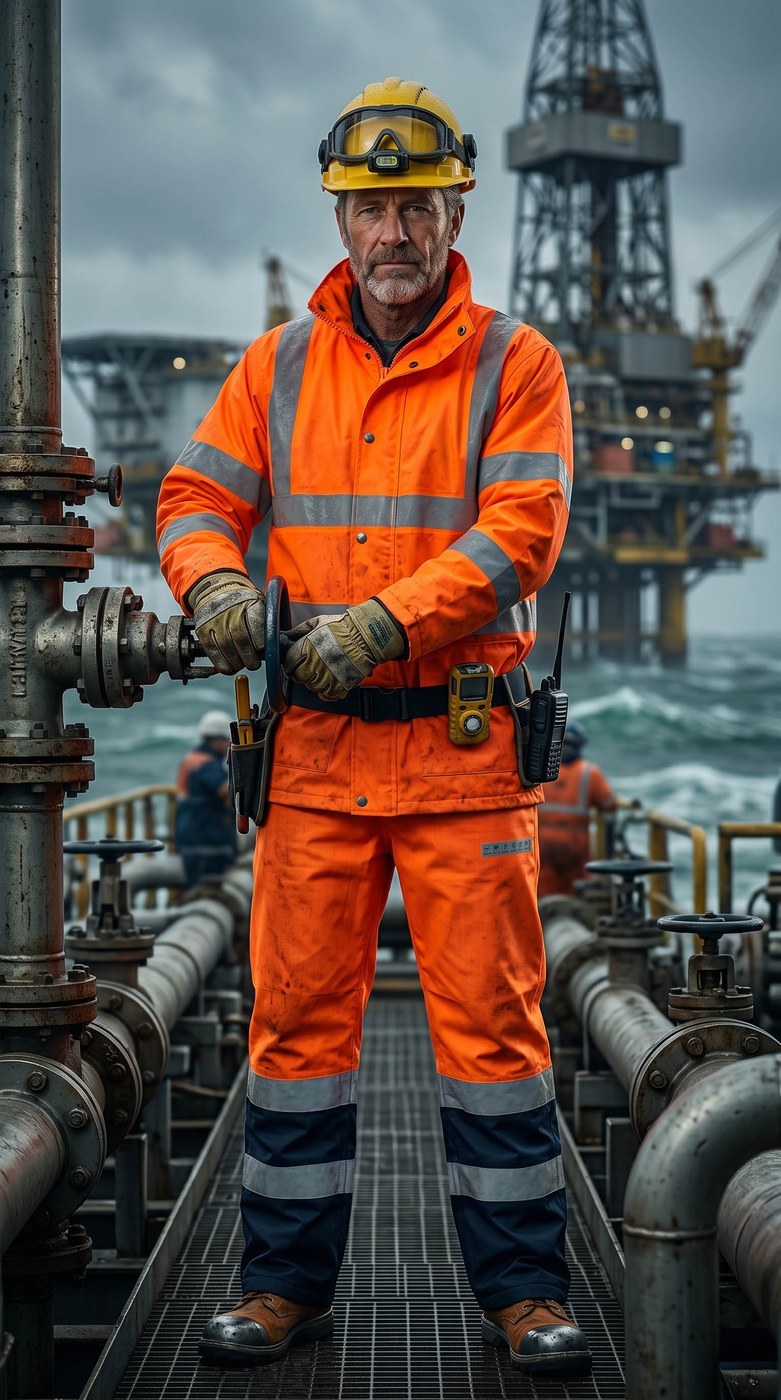
Most flame retardant workwear fails quietly. At month three the garment looks identical to the day it arrived — same colour, same reflective tape, same label — but the protection that justified the price may already be half gone. The cause is rarely a dishonest supplier. It is a category that looks like one product and is really two, sold under the same words.
Two ways to make fabric resist flame, and only one survives washing
There are two industrial routes to flame retardant fabric. They look the same in a photo and behave completely differently over the life of the garment.
- Treated (FR finish) — cotton or cotton-blend fabric is passed through a chemical bath and cured, so the flame retardant sits in and on the fibre. It is the cheaper route, it feels like cotton, and its protection is finite: every industrial wash removes a little. Suppliers in this route typically claim performance up to around 50 industrial wash cycles, after which the garment should be re-tested or retired.
- Inherent flame retardant — the fibre itself does not support combustion. Modacrylic, aramid and flame retardant viscose blends belong here. The protection cannot wash out, because it is not a coating, it is the material. It costs more per metre, and it is the only sensible choice for garments that will be laundered hard or used for years.
So the question to put to a supplier is not "is it flame retardant". It is: inherent or treated, and after how many washes does it still pass the test? A supplier who works in this category every week answers without hesitating. One who does not answers with the word "yes".
If a buyer asks for a test report after 50 washes and nobody can produce one, the reason is nearly always the same: the fabric was treated, and the report was issued on new cloth.
Reading the code string: EN ISO 11612 A1+A2 B1 C1 E2 F1
This is the line buyers send us most often, and also the line most often copied without being understood. EN ISO 11612 covers protective clothing against heat and flame. Each letter is a separate hazard test — it is not a quality score, and the letters do not rank the garment.
- A — limited flame spread. A1 is surface ignition, A2 is edge ignition. The base test: does the fabric keep burning once the flame is removed? Nearly every heat and flame garment claims A1, A2 or both.
- B — convective heat. B1 to B3, rising with exposure time. The heat you feel from a flame in open air.
- C — radiant heat. C1 to C3. The heat reaching you from a furnace, a fire or hot metal at a distance.
- D — molten aluminium splash. D1 to D3. Relevant to aluminium smelting, and to little else.
- E — molten iron splash. E1 to E3. Foundries, steel plants, anywhere molten metal is poured or tapped.
- F — contact heat. F1 to F3. Hot surfaces touched directly: pipes, plates, moulds, tools.
Two consequences follow, and both cost money when they are missed. First, higher is not automatically better: a higher B or C level usually means a heavier, stiffer, hotter fabric, which is a genuine penalty in a hot climate or through a summer shift. Second, the code has to match the job. A welder needs E against molten metal and usually F for contact heat. A steel worker pouring metal needs both. An electrician working near live panels is not served by 11612 at all — that is a different standard, covered below.
Quote the code with its levels attached. "EN ISO 11612" alone does not describe a garment. "EN ISO 11612 A1+A2 B1 C1 E2 F1" does.
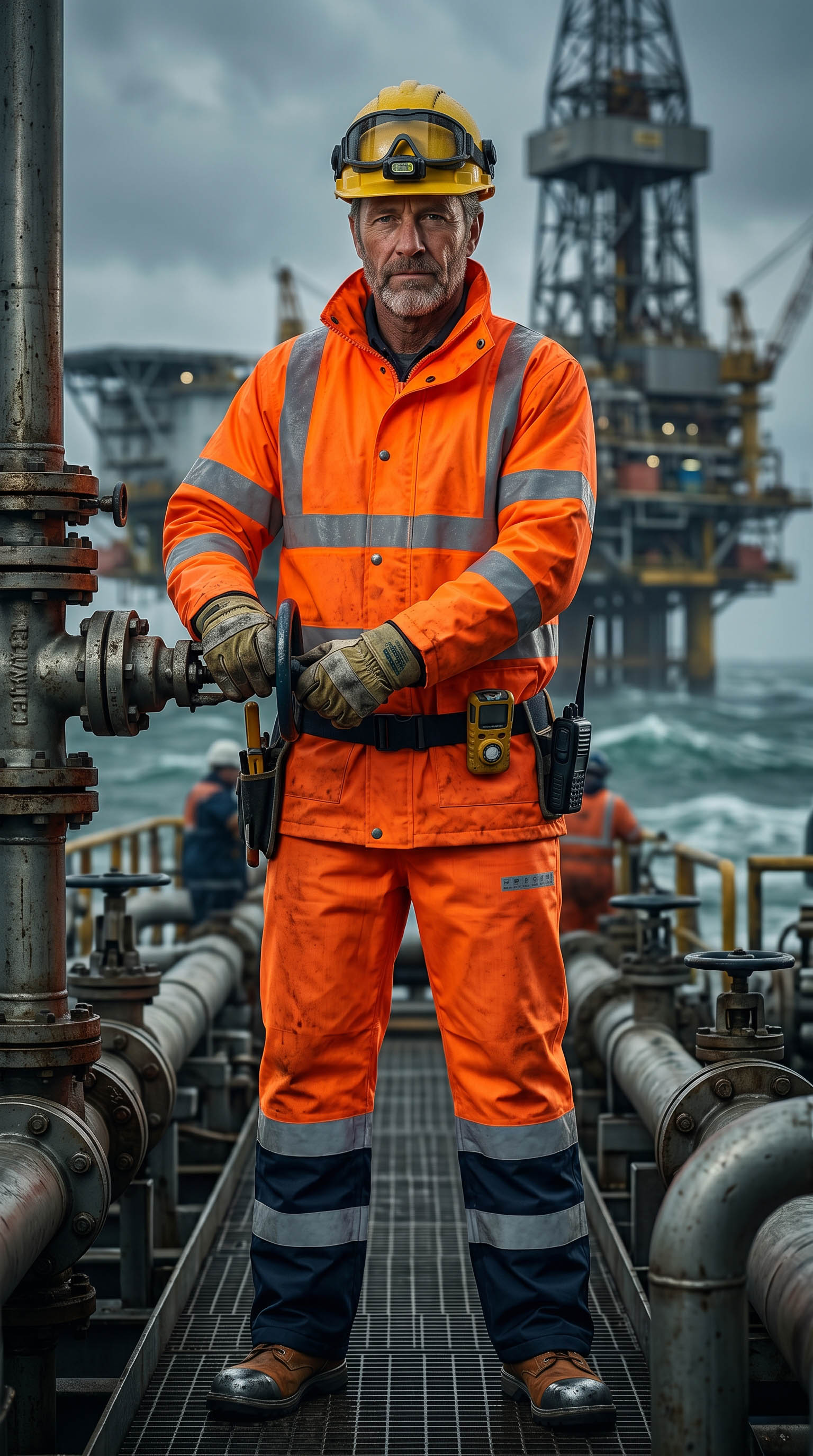
Arc flash is a separate standard, and 11612 does not cover it
An electric arc is not a flame. It is a short, violent release of energy — tens of thousands of degrees for a fraction of a second — plus pressure, sound and molten metal thrown off the conductors. Clothing tested against heat and flame is not thereby tested against arc, and the two tests are not interchangeable.
Arc protection sits in IEC 61482-2. The number on the label appears in one of two forms, because there are two test methods:
- ATPV or EBT, in cal/cm² — the energy the fabric can absorb before the wearer would sustain a second-degree burn. This comes from the open-arc test.
- APC 1 or APC 2 — the arc protection class from the box test, where the garment faces a confined arc at 4 kA or 7 kA.
If your risk assessment says arc flash, ask for arc flash clothing tested to IEC 61482-2, and ask for the ATPV figure. A supplier who answers with 11612 has answered a different question, whether or not they realise it.
The layering mistake that turns good clothing into a bad burn
This belongs in every quotation and is in almost none of them.
A flame retardant outer layer worn over an ordinary polyester T-shirt is not a safe combination. Under intense heat, thermoplastic fibres melt and adhere to skin, and molten polyester on skin produces a deeper, worse injury than the same heat on bare skin — the fabric holds the heat against the body and cannot be pulled away. The outer garment performed exactly as tested. The system failed.
The rule is simple to state and easy to break in practice: everything in contact with skin should be flame retardant, or at least a non-melting natural fibre. That covers the base T-shirt, the underwear, the winter fleece and the balaclava under the helmet. If workers supply their own base layers, that instruction belongs in the tender document, not in a toolbox talk after the first incident.
High visibility and flame retardant at the same time
Oil and gas, rail, utilities and mining often need both. Both is harder than either. The visibility side is governed by EN ISO 20471; the flame and arc side by EN ISO 11612 or IEC 61482-2. A garment can hold both certifications, and a correct label lists both.
The component that breaks the combination is the reflective tape. Standard tape is frequently a metallised film on a plastic carrier — precisely the thermoplastic material the rest of the garment was designed to avoid. If the tape is not flame retardant, the garment can burn along the tape line and fail on the trim rather than the shell. Ask which tape is used and whether it is FR-rated, and expect a tape brand and a certificate in reply.
Anti-static belongs in the same conversation
Where there is solvent, fuel vapour or fine combustible dust, a static discharge is an ignition source. There the garment has two jobs: not burn, and not store charge. EN 1149-5 is the clothing performance requirement, met by weaving conductive fibre into the fabric so that charge has a path to earth through the garment and the wearer's contact with the ground.
Two practical consequences. The conductive path only works when the garment is worn closed and the wearer is earthed — a hi-vis vest over a non-conductive jacket defeats it entirely. And anti-static performance is sensitive to contamination: the wrong detergent, a fabric softener, or a repair patch sewn with ordinary thread can break the path. Neither failure is visible in an inspection, which is why care instructions matter more in this category than in any other workwear we produce.
What we need in order to quote it correctly
- The hazard — industry, heat source, whether molten metal or an arc is in the picture
- The standard and the levels — for example EN ISO 11612 A1+A2 B1 C1 E2 F1, not just "11612"
- Laundry reality — home wash, industrial wash, or a rented service, and roughly how many cycles a garment should survive
- Fabric preference — weight in GSM, colour, and whether the hand of the cloth matters to the wearer
- Volume and calendar — our minimum is 1,000 pieces per colour for custom production, counter samples take 7 days once the spec is locked
- The laboratory your market accepts — this determines which test reports are worth paying for
With those six items a quotation is precise. Without them, any price you receive is a guess wearing a price tag, and the guess almost always lands on treated cotton, because that is the cheapest way to satisfy the words in the enquiry.
What we can promise, and what we will not
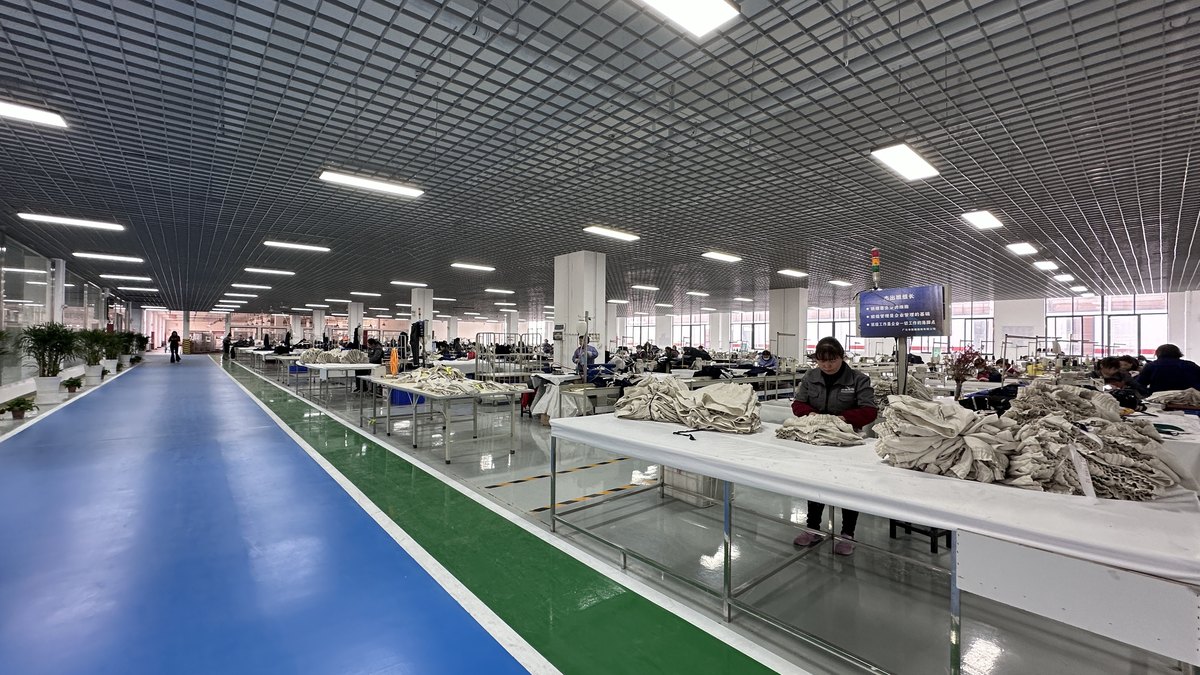
We make flame retardant coveralls, jackets, trousers and anti-static workwear in our own plant: 20 years of OEM production, a 20,000 m² facility, 350+ operators, roughly 200,000 pieces a month, counter samples in 7 days. We buy fabric against the standard you name, and we keep the mill's certificate for the roll that went into your order.
What we will not do is print a standard code on a label and call the garment certified. Heat and flame certification is issued by a testing house against a specific fabric and a specific construction. It is not a property of a factory, and it does not transfer from one fabric to the next. If you need EN ISO 11612 or IEC 61482-2 certification, tell us which laboratory your market accepts and it enters the cost and the calendar at the start, instead of surfacing as a problem at shipment.
Our own certificates — ISO 9001, OEKO-TEX Standard 100, Global Recycled Standard, CE marking and BSCI social compliance — we send before you ask, with scope and expiry date, so you can check them rather than trust them.
Send us the standard code and the hazard behind it. We will come back with the fabric options that meet it, the certificates that apply to each one, and a price against your volume. WhatsApp +86 186 6433 3611 · jj.zhan@qzgarment.com