Workwear Fabric Guide: Cotton, Poly-Cotton, CVC and Stretch Blends Compared
- Share
- publisher
- Qianzhan Garment
- Issue Time
- Oct 15,2026
Summary
A buyer's comparison of the fabrics used in industrial workwear, covering cotton, poly-cotton, CVC, ripstop, canvas and four-way stretch. Compare GSM, durability, shrinkage and colourfastness, then match the fabric to the industry and the protective finish your market requires.
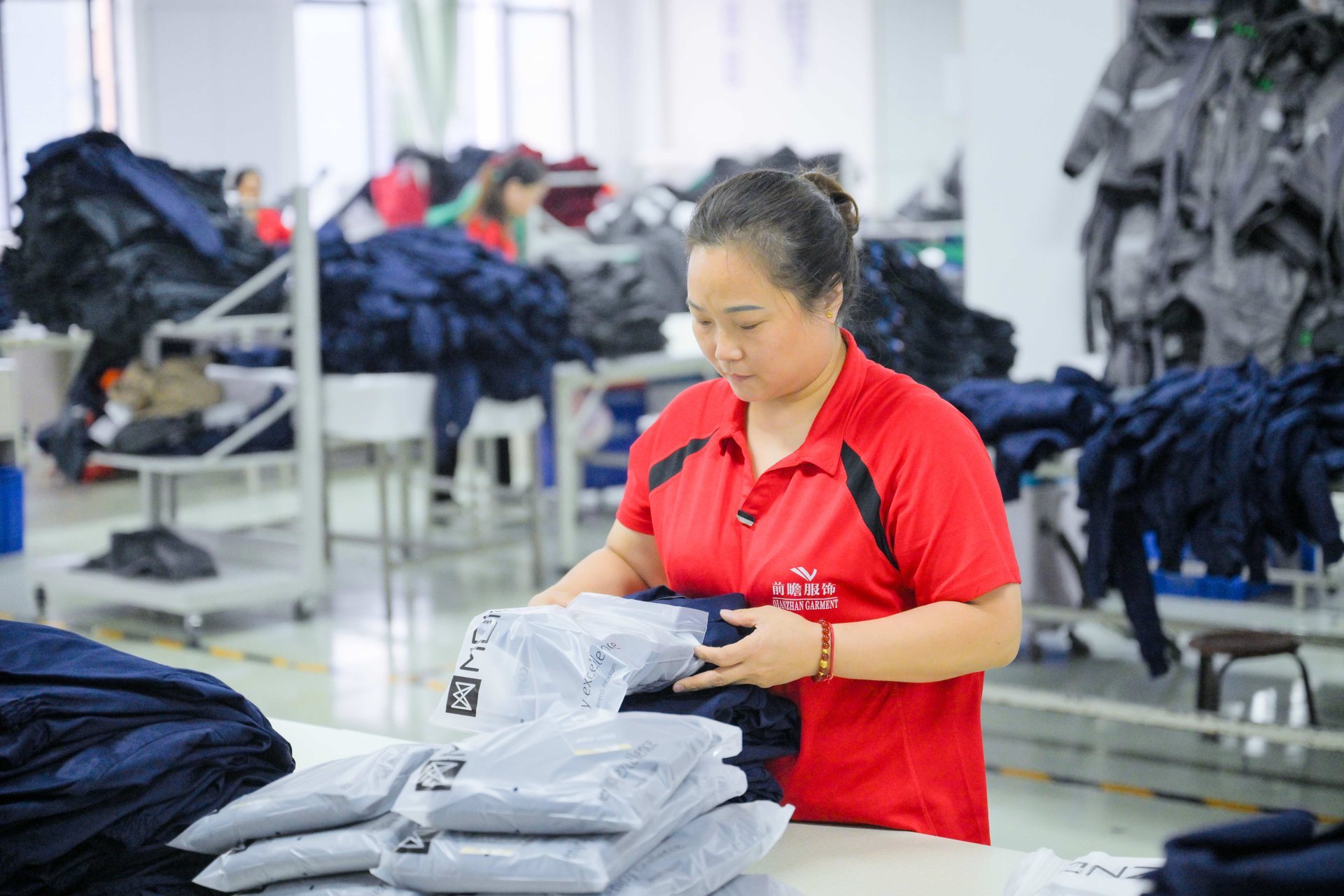
Fabric decides how a workwear programme performs: how it wears, how it washes, how it holds colour and how long it survives. This guide compares the fabrics used most often in industrial workwear and maps them to the industries they suit.
The four questions fabric has to answer
Before comparing weaves, define the requirement: abrasion resistance for the task, comfort and breathability for the climate, wash durability for the laundry cycle, and any protective performance the garment must carry.
- Abrasion and tear resistance for the actual work
- Breathability and weight for the climate
- Colourfastness and shrinkage across the wash life
- Protective performance: hi-vis, FR, anti-static or water repellent
Fabric comparison at a glance
| Fabric | Typical GSM | Strengths | Watch out for | Typical use |
|---|---|---|---|---|
| 100% cotton | 240 to 320 | Breathable, comfortable, takes embroidery and printing well | Shrinks and fades, dries slowly, weaker when wet | Light industrial, workshop, hospitality |
| Poly-cotton (65/35) | 200 to 260 | Good colour retention, low shrinkage, easy care | Less breathable, can feel stiffer | General industrial, maintenance |
| CVC (60/40) | 220 to 280 | Softer hand feel than poly-cotton, better colour depth | Higher cost than poly-cotton | Premium industrial, uniforms |
| Polyester ripstop | 180 to 240 | High tear strength, low weight, quick drying | Less breathable, static build-up | Outdoor, high visibility, light work |
| Canvas | 340 to 420 | Very high abrasion resistance | Heavy and stiff, longer break-in | Carpentry, heavy industry, tool carrying |
| Four-way stretch | 220 to 280 | Freedom of movement when kneeling and climbing | Higher unit cost | Technical trades, logistics, service work |
What GSM really tells you
GSM measures fabric weight per square metre and correlates with durability, but only within the same weave. A 240 GSM ripstop will beat a 240 GSM plain weave on tear strength while weighing the same. Always compare GSM within a fabric type, never across types.
Quantity matters too: GSM is measured on the greige fabric, while the finished garment is affected by washing, dyeing and any finish applied. Ask for GSM on the finished, ready-to-wear fabric where the specification is tight.
Finishes that change the choice
Flame retardant
FR fabric is either inherently flame retardant or treated. Inherent fabrics keep their protection for the life of the garment; treated fabrics must be re-tested after the specified number of industrial washes.
Anti-static
Required in petrochemical, gas and dust-risk environments, usually tested to EN 1149. The finish is applied to the fabric, so it has to be specified before dyeing rather than added later.
High visibility
Fluorescent background plus retroreflective tape tested to EN ISO 20471. Tape quality and placement matter as much as the base fabric, and both are part of the certification.
Water repellent and waterproof
A DWR finish sheds light rain; EN 343-rated laminates are needed for sustained rain and are quoted as a two-part rating for waterproofness and breathability.
Mechanical stretch
Two-way stretch for comfort, four-way stretch where kneeling, reaching and climbing dominate the shift. Stretch is usually built into the weave rather than added as a finish.
Matching fabric to industry
| Industry | Recommended fabric | Why |
|---|---|---|
| Automotive and assembly | Poly-cotton or four-way stretch | Abrasion resistance with the movement needed on the line |
| Construction | Canvas or poly-cotton, reinforced knees | High abrasion and tear loads |
| Petrochemical | FR and anti-static, inherently FR where possible | Protective performance must survive laundering |
| Logistics and warehousing | Four-way stretch or lightweight ripstop | Constant bending, lifting and stretching |
| Outdoor and utilities | Ripstop with a waterproof laminate, plus hi-vis | Weather protection with visibility |
| Food processing | Polyester or poly-cotton, easy-care finish | Frequent high-temperature washing |
Three tests worth requesting before bulk production
- Colourfastness to washing and to light, run on the actual fabric lot
- Dimensional stability after three wash cycles at the agreed temperature
- Tear and tensile strength on the finished garment, not just the greige fabric
The short version
Choose the weave and GSM from the working conditions, then choose the finish from the regulation. Buying on price per metre alone usually reappears later as replacement rate.
Not sure which fabric fits your market?
Tell us the industry, the climate and the certification required, and we will recommend the fabric, GSM and finish, then send a sample for approval.